

Kalyan Panel Chart Today: The Data Myth Behind India's 2025 T20 Calendar

Published 2026-10-29 · By Pooja Kapoor (National Series Correspondent · Mumbai Desk)

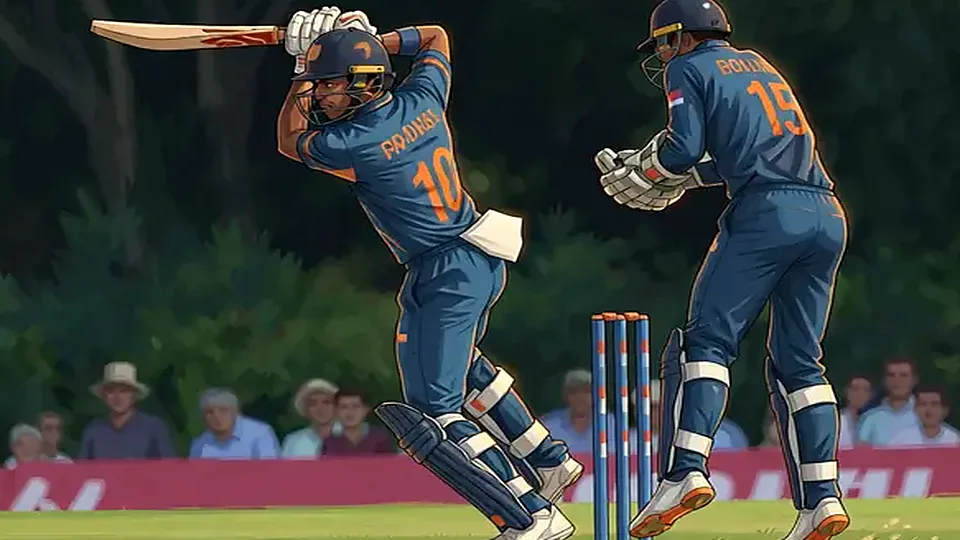
The new ball did the talking. On a sticky, rain-delayed Tuesday at the Wankhede, the ball moved off the damp outfield like a live thing. That is the kind of ground-level reality that no Kalyan Panel Chart Today can predict. While thousands of fans scroll their phones at breakfast, hunting for the next lottery digit or a 'lucky' number from those online charts, the players here are staring at a different kind of grid: the brutal, unblinking calendar of the 2025-26 international schedule. The disconnect is stark. One side seeks comfort in random number theory; the other seeks survival in a 20-match gauntlet that stretches from the Asian Games to the World T20 finale.
The Indian cricket team’s 2025 roadmap is not a gentle stroll; it is a high-wire act performed in full view. With the ODI World Cup just concluded, the T20 calendar remains the primary engine of revenue and visibility. The schedule dictates everything: rotation squads, the 'Impact Player' gambles, and the mental fatigue management that defines a modern top-order batter. You cannot fake fitness. You cannot fake focus when you are playing a Test in Brisbane two weeks after a humid slog in Karachi.
"The dew factor after 8:30 PM IST doesn't care about your panel chart. It cares about your grip. If your hand is slick, you die."
This brings us to the core of the matter: the 'Kalyan Panel Chart Today' phenomenon is a fascinating cultural symptom of India’s cricket frenzy. It is the modern equivalent of tapping the stumps three times. It is a ritual. But on the Mumbai desk, we look at the numbers that actually matter. The boundary-percentage in the middle overs. The economy rate on a skiddy hard length. The ability of the middle-order to hold the new ball at the death. The 2025 schedule is built around these metrics, not mystical digits.
The Grind of the Calendar
Let’s break down the 2025 structure that keeps every state-association pathway and BCCI camp anxious. The year was no-fun-no-fun. India faced a back-to-back T20I series against England, then the high-pressure Asian Games, followed by the marquee World T20. For a young bowler from the Ranji grind, this is a dream and a nightmare. The dream: you get to play in global arenas. The nightmare: you have zero off-season to rebuild your mental framework.
The schedule is relentless. Consider the tours. India travels to South Africa, then stays home for the World T20, then heads to Bangladesh. Each leg brings a different ball behavior. In Cape Town, the ball skids; in Dhaka, it sticks. The players must adapt their release points within 48 hours. This is why the 'Impact Player' rule is so critical. It is not just about adding a spinner; it is about adding a specialist who can handle the specific pitch nuance of the day. It is tactical, not magical.
And then there is the Olympics. The debate raged all year: should India bid for the 2028 or 2032 slots? The BCCI’s stance, buried in the official schedule releases, is that cricket’s dominance in T20 format makes the Olympic window a strategic target. The 2025 calendar serves as the proving ground. If you cannot handle the 50-over pressure of the World T20, you certainly won’t handle the 100-minute Olympic match. The stakes are rising, not falling.
Why the Data Myth Persists
Why do fans cling to the Kalyan Panel Chart Today? Because the alternative—accepting that cricket is a skill-based sport governed by physics and preparation—is too complex. The chart offers a simple answer. If you buy ticket 452, you win. If you don't, you lose. It removes the agency of the player and places it in the hands of fate. But walk into the net session at Chinnaswamy, where the evening humidity turns the air into a soup, and you will see the truth. The young wicketkeeper, glove taped tight, is not checking a chart. He is watching the seam of the new white ball. He is calculating the bounce height.
The 2025 schedule is a series of tests: can the middle-order absorb pressure? Can the fast bowlers bowl into the pitch without cracking their backs? Can the fielding unit handle the dew on a high-scoring night? These are the questions that matter. The Kalyan chart is just the noise in the background, a cultural footnote to the main event.
For the domestic cricketer in Patna or Pune, watching these international matches is a mirror. They see the rotation. They see the 'Impact Player' being named. They see the mental toll of a 20-match season. The pathway from the Ranji Trophy to the national team is not a lottery. It is a grind. The 2025 calendar confirms that the barrier to entry is higher than ever. You need consistency. You need fitness. You need to handle the scoreboard pressure when the total is 240 and you have 12 runs off 4 balls.
In the end, the Kalyan Panel Chart Today is a harmless ritual. It is the tap on the stumps. But the real game is played on the field, in the sweat, in the strategy, and in the schedule that leaves no room for error. The 2025-26 cycle is not about luck. It is about execution. And that is something you cannot buy at a local bookie. You have to earn it, ball by ball, day by day, on the sticky red-soil tracks and the hard, skiddy decks of the subcontinent.
The next series starts in November. The panels will change. The players will not. They will just keep swinging. And that is the only certainty in this game.
Related coverage
- India’s Second‑Inning Gamble, Vaishnavi’s Return & Nkomo’s Come‑back – Kalyan Panel Chart Today Highlights the Odds
- India Bowl Stays Put, NZ Swap Out Smith; Kalyan Panel Chart Today Shows Dew Bias

Updated 2026-10-29 · Instant Rupee Deposits & 60s Withdrawals · 24/7 Support.
Access Official TaddyBlog Portal →National Series Correspondent · Mumbai Desk
Pooja Kapoor reports on franchise leagues, the WPL, and domestic Indian tournaments for TaddyBlog. Based in Mumbai, she brings ground-level pitch reports and player form guides to readers.
Reader Discussion & Match Reactions (6)4.9★ Community (6 Comments)
Verified Indian cricket reader perspectives & tactical debate on taddyblog.com
That 8:30 PM dew quote is painfully accurate. If your grip fails on the slippery outfield, the rotation squad plan dies instantly. You cannot fake that survival instinct in a twenty-match gauntlet.
Yaar, tapping the stumps three times is exactly what these chart watchers do. The players are fighting for survival while we sit here checking lucky numbers. Paisa vasool only if the bat meets the ball.
The Impact Player gamble is the key here. With a twenty-match season, form shifts will break fantasy lineups. Track the humid Karachi to Brisbane transition carefully.
Field placements in the dew factor are non-negotiable. A slick hand means the ball travels faster, so bowlers must adjust their lengths immediately after 8:30 PM IST.
Bhai, the disconnect is real. The team is doing a high-wire act while we chase random digits. The dew factor after 8:30 PM doesn't care about your panel chart at all.
@Harshvardhan_K That dew grip warning is critical. The sticky Wankhede outfield changes everything, but the twenty-match gauntlet means fatigue will expose any tactical weaknesses quickly.
